Project members Dr. Benjamin Ade-Thurow, Anni Lenz & Prof. Dr. Bianca Roters
Plurilingual Practice and Pedagogical Reflection explores how English language education can engage meaningfully with the full linguistic repertoires of learners in increasingly diverse classrooms. Drawing on research in plurilingualism and critical applied linguistics, the project conceptualises English not as an isolated, monolithic system, but as part of dynamic linguistic repertoires shaped by learners’ biographies, communities and everyday language practices.
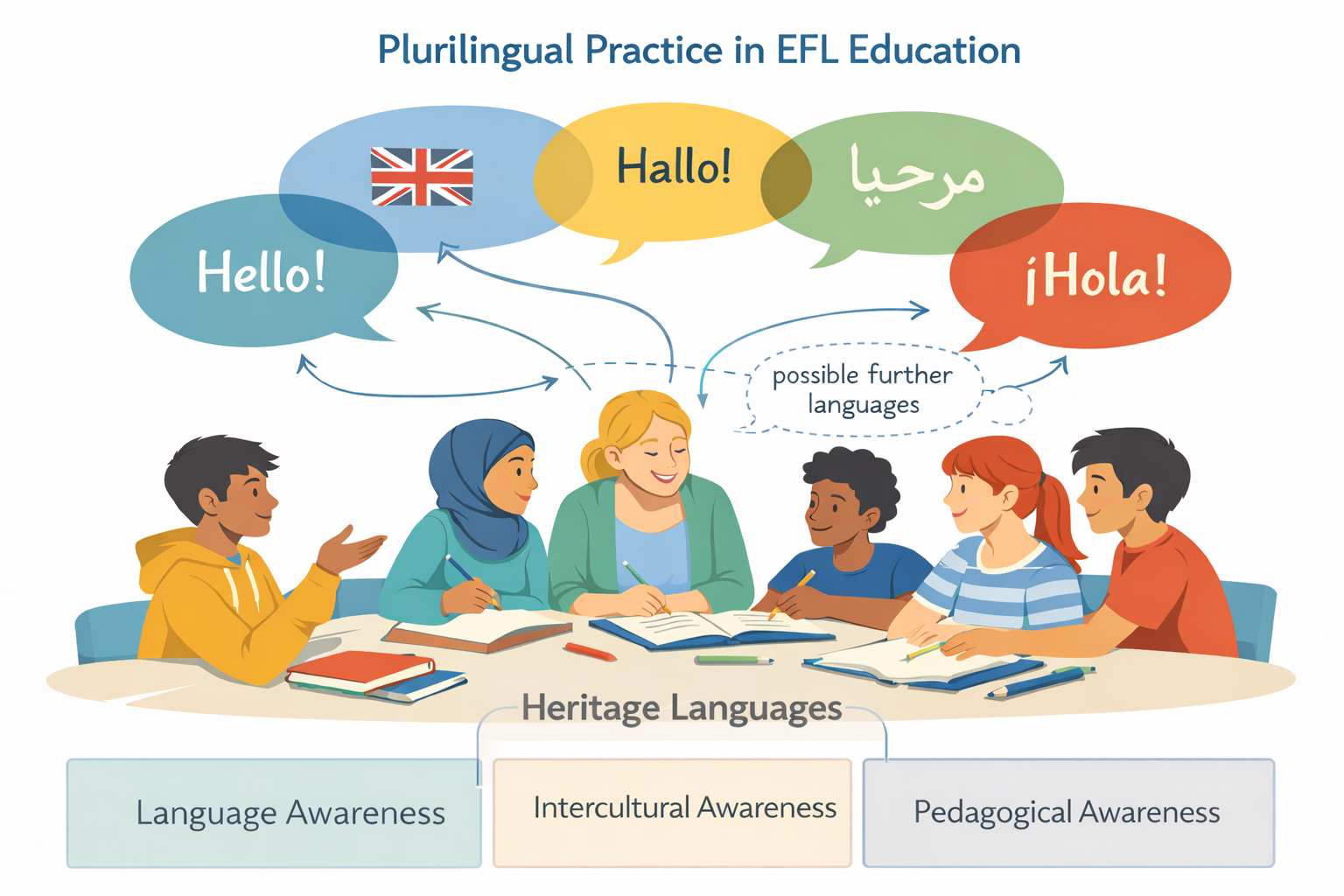
The project links plurilingual classroom practice with pedagogical reflection as a central dimension of teacher professionalism. Pre-service teachers examine how languages and varieties are mobilised, compared and valued in educational settings. They also reflect on how their own linguistic biographies, assumptions about language and implicit norms influence pedagogical decisions. Plurilingual practice is understood as a reflective teaching principle that connects language awareness, intercultural and democratic awareness, and pedagogical self-awareness. Storytelling, translanguaging, work with varieties of English, cross-linguistic comparison and inquiry-oriented tasks can create opportunities for learners to use existing resources while expanding their capacity to participate in English-mediated communication. Particular attention is paid to both affordances and tensions. Cross-linguistic influence, unequal valuations of languages and norm-oriented expectations can shape who is heard and whose resources are recognised. The project therefore asks not only how plurilingual resources support learning, but also how teachers can make principled, context-sensitive decisions about their use.
Guiding question
How can plurilingual practices and pedagogical reflection support language awareness, inclusive participation and responsible professional decision-making in EFL education?
Publications
Roters, B. & Ade-Thurow, B. (2027, in preparation, already accepted for publication). Entwicklung von plurilingualen Tasks durch KI-gestützte Unterrichtsplanung. Zeitschrift für Interkulturellen Fremdsprachenunterricht, 2027(1). Themenschwerpunkt: Mehrsprachenlehren/-lernen trotz/mit/über/durch/ohne KI! Wie disruptiv ist diese ‹neue› Technologie tatsächlich?
Conference Presentations and Invited Talks:
Roters, Bianca. A Seat at the Table: Plurilingualism in the EFL Classroom from the Perspective of Social Justice and Wellbeing, PH Heidelberg (2025, 2026)
Roters, Bianca. Lesson Planning with AI: Embracing Plurilingualism in Teaching English as a Foreign Language, Research Breakfast, Ludwigsburg University of Education (2025)
Roters, Bianca, Scheffer, Kathrin (2023). Challenging the monolingual mindset – Strategien zum Umgang mit Lerner*innentexten in plurilingualen Kontexten. Symposium Lerner*innentexte, Universität Lüneburg
Research–Teaching Connection:
Selected courses provide spaces for connecting current research with the analysis, design and reflection of story-based learning environments in EFL teacher education.
AI Meets Plurilingualism: Exploring and Analyzing Linguistic Landscapes, Ludwigsburg University of Education