Connecting Linguistic Knowledge, Inclusive Task Design and Professional Judgement
Reflective practice is a central dimension of professional learning in English language teacher education. It enables teachers to examine how linguistic knowledge, pedagogical assumptions, learner diversity and contextual conditions shape their decisions.
Reflection is understood here as more than retrospective self-evaluation. It is a situated, inquiry-oriented and evidence-informed practice through which teachers perceive classroom situations, interpret their significance, develop pedagogical responses and reconsider their effects.
Reflection as Professional Practice
Professional reflection involves a recurring movement between knowledge, perception, interpretation, design and action:
perceiving → interpreting → designing → acting → reconsidering
New observations may challenge initial interpretations, while classroom interaction can require teachers to adapt planned support, tasks and communicative pathways. Reflective practice therefore combines analytical structure with responsiveness to emerging situations.
Applied Linguistics provides conceptual and analytical resources for this process. Teachers can examine linguistic demands, available resources, participation structures and assumptions about language, proficiency and correctness. Reflection connects such analysis with context-sensitive professional judgement.
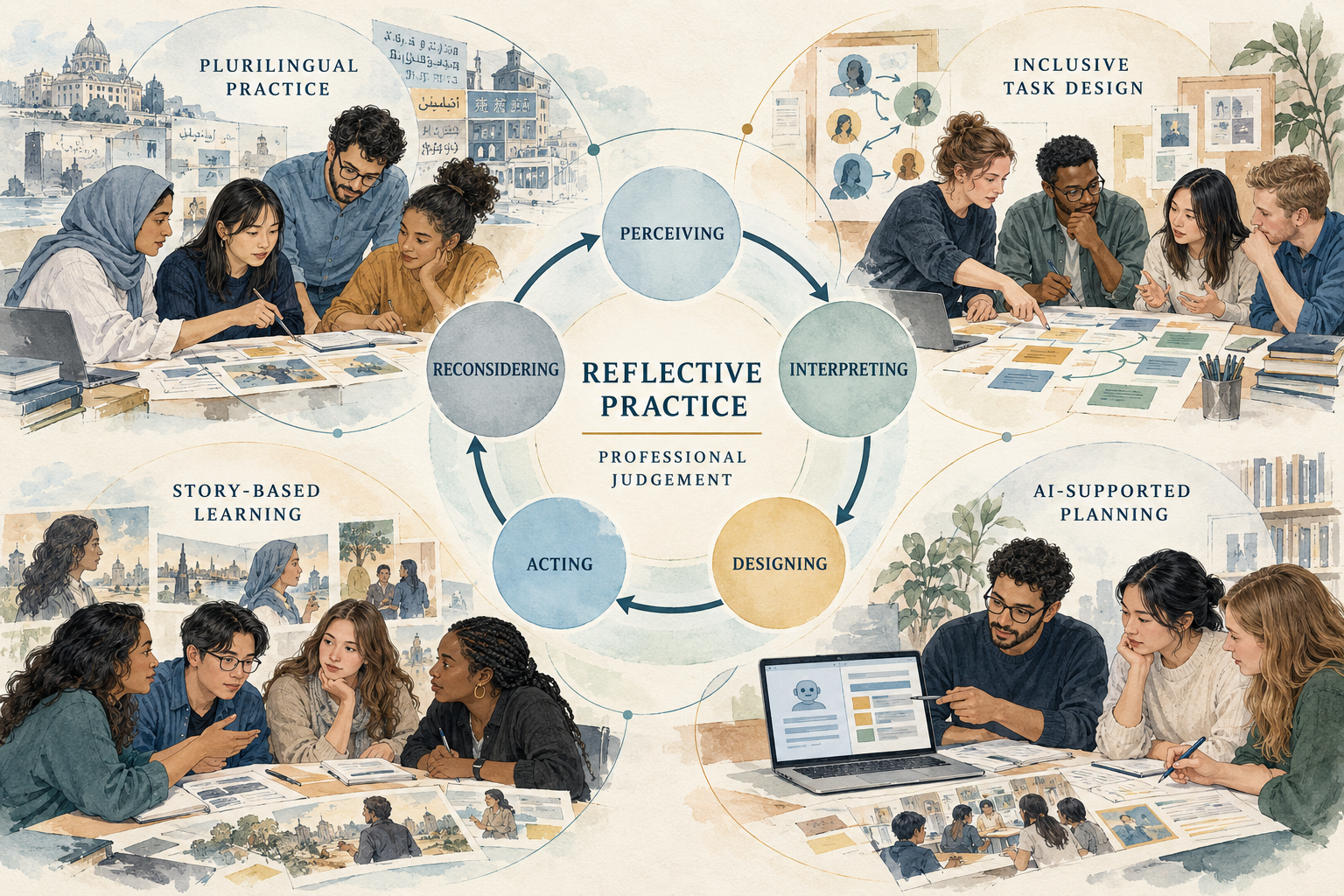
Connecting the Research Strands
Inclusive Task Design
Reflection supports decisions about linguistic accessibility, cognitive challenge, scaffolding and different forms of participation. The principle of adaptive structured openness captures the need to provide sufficient orientation and support while preserving different pathways, interpretations and outcomes.
Story-Based Learning
Stories create opportunities for meaning-making, perspective-taking and learner voice. Reflective task design considers which perspectives narratives include, how learners are positioned and whether linguistic support opens or restricts possible interpretations.
Plurilingual Practice
Plurilingual teaching requires attention to linguistic biographies, language ideologies and implicit hierarchies. Reflection helps teachers make principled decisions about how learners’ repertoires, cross-linguistic resources and different varieties of English can become part of shared classroom communication.
AI-Supported Lesson Planning
Generative AI can extend the range of materials and lesson alternatives available to teachers. Reflective practice is necessary to identify limitations, question linguistic and pedagogical assumptions and adapt generated proposals to specific learners and contexts. AI-supported planning can thereby become a development space for professional vision, judgement and teacher agency.
Research–Teaching Connection
In English language teacher education, pre-service teachers engage with lesson plans, tasks, narratives, learner texts, classroom cases and AI-generated materials. They analyse linguistic and cognitive demands, compare alternative courses of action and make their design decisions explicit.
These activities position reflection not as an isolated exercise but as a form of linguistically informed professional reasoning.
Guiding Questions
- How can linguistic knowledge support reflective pedagogical decision-making?
- How can reflective practice inform inclusive, plurilingually responsive and story-based task design?
- How can AI-supported planning strengthen professional vision and agency without replacing professional judgement?
Connected Research Projects
- Inclusive (Story-Based) Tasks in Early EFL
- Plurilingual Practice and Pedagogical Reflection
- Augmented EFL Lesson Planning
- Narrating Futures of Well-Being
- Storytelling as a Democracy Hub
Together, these projects investigate reflective practice at different points of professional decision-making: analysing language and tasks, recognising diversity, designing learning environments and evaluating pedagogical and technological possibilities.
Contribution to Inclusive Linguistics
Within the emerging framework of Inclusive Linguistics, reflective practice connects linguistic analysis with professional action. It supports the development of learning environments that enable access, meaningful participation, voice and agency.
Keywords: Reflective Practice · Professional Judgement · EFL Teacher Education · Inclusive Task Design · Plurilingualism · Story-Based Learning · AI-Supported Lesson Planning · Inclusive Linguistics